Search for:

In brief

On 14 September 2021, the US Department of Justice’s Antitrust Division (DOJ) and the US Federal Trade Commission (FTC) issued a Joint Statement (Statement) on antitrust enforcement regarding collaborative relief efforts after Hurricane Ida. The Statement recognizes that collaboration among companies ― even among competitors ― may be necessary and beneficial to assist communities with rebuilding and relief efforts. However, the Statement also makes clear that neither agency will tolerate attempts to subvert competition laws or engage in illegal conduct under the guise of disaster recovery. Both agencies will use their enforcement authority and tools to prosecute anticompetitive and fraudulent conduct taking advantage of hurricane victims or relief efforts. These tools include the DOJ’s Procurement Collusion Strike Force, which has trained 1,500 investigators and has several ongoing investigations.


Key Takeaways 

The agencies recognize that collaborative agreements may be essential to help communities affected by the disaster and to expedite rebuilding efforts. The Statement cites the Antitrust Guidelines for Collaboration Among Competitors, which provide guidance on how businesses can collaborate without violating the antitrust laws. The Statement also provides examples and describes the various benefits of certain business collaborations to respond to disasters. The US agencies issued similar antitrust guidance in the wake of Hurricane Katrina and Rita, as well as guidance for Hurricanes Harvey and Irma in 2017. Likewise, the agencies issued similar guidance during the COVID-19 health crisis.1  Even so, the US antitrust laws are not being relaxed. The Statement makes clear the agencies intend to hold accountable companies and individuals who enter into anticompetitive agreements that exploit hurricane victims or hurricane relief efforts. 

In More Detail 

The statement recognizes that the rebuilding of communities affected by the storm requires cooperation among private businesses and federal, state and local governments. It also highlights numerous business sectors that have been affected by the disaster, including health care, housing, telecommunications, and retail. The agencies acknowledge that collaborative agreements can enable businesses to recover more quickly than working alone. The guidance provides examples of permissible collaborations, including agreements to combine health care services to meet the needs of the affected communities, or to more quickly bring vital supplies to those in need.

The Statement emphasizes that US antitrust laws are sufficiently flexible to allow for these types of competitor collaborations when they are applied with proper scope and length to respond to the disaster.

Companies must not use this flexibility as cover for anticompetitive conduct. As a member of the National Center for Disaster Fraud Task Force, DOJ commits to investigate and prosecute anticompetitive or fraudulent schemes that follow the disaster. Likewise, the FTC will investigate companies or individuals engaging in conduct violating consumer protection laws that target victims of natural disasters. 

The key takeaway is that companies cannot use Hurricane Ida or other natural disasters as an excuse to break the US antitrust laws. The DOJ and FTC have made clear that they will pursue any businesses or individuals who engage in fraudulent conduct, attempt to undermine the competition laws, or disguise illegal conduct as disaster relief efforts.


1. FTC-DOJ Joint Antitrust Statement Regarding COVID-19 – 24 March 2020
Author

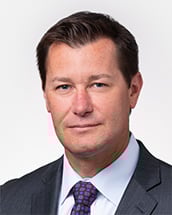
Jeff Martino is a partner in the Firm's North America Antitrust & Competition Practice Group and National Security Practice Groups. He brings an in-depth understanding of a wide variety of white collar and fraud related matters to his antitrust litigation and investigations practice. Jeff is co-lead of the Firm's Global Cartel Task Force and represents multinational corporations and their boards and executives in high-stakes criminal and civil investigations by the US Department of Justice (DOJ) and other federal and state agencies. Jeff draws upon his extensive criminal investigations, litigation, and enforcement experience to advise clients through sensitive matters pertaining to international cartel actions and white collar investigations. Prior to joining Baker McKenzie, Jeff spent nearly two decades at the DOJ and his last five years as Chief of DOJ Antitrust Division's New York Office. He also served in the U.S. Attorney Office for the District of Arizona where he was the Deputy Chief of the Public Corruption and Financial Crimes Unit. He has extensive experience as "first chair" on trials and investigations in the most complex areas of criminal antitrust, market manipulation, and consumer protection.

Author

Mark Weiss is a partner in the Firm's North America Antitrust & Competition Practice Group and the North American Chair of the Practice’s Litigation Task Force. He is a seasoned litigator with deep expertise in antitrust, class action, and federal multi-district litigation and represents clients in high-stakes disputes across a range of industries, with a focus on complex commercial and competition-related claims. Mark defends clients in nationwide class actions and seamlessly navigates the procedural and strategic challenges of MDLs in federal court. Mark’s is also a highly regarded criminal antitrust attorney with significant experience representing clients in complex cartel investigations and enforcement actions. Mark has a strong track record advising corporations and executives in high-stakes matters involving the U.S. Department of Justice’s Antitrust Division, particularly in cases involving leniency and cooperation strategies. He has a deep understanding of the leniency program and is a trusted advisor in navigating cross-border investigations. Mark also has extensive experience as a leading antitrust merger attorney and has led numerous clients through complex regulatory reviews and merger clearance processes. He advises on all aspects of pre-merger strategy, including Hart-Scott-Rodino (HSR) filings, competitive risk assessments, and engagement with the Federal Trade Commission and Department of Justice. Mark advises clients on a wide range of antitrust compliance issues, helping companies design and implement effective compliance programs tailored to their business operations and risk profiles. Mark is an expert in handling matters consistent with recent antitrust trends including artificial intelligence, algorithmic pricing, information-sharing, and both vertical and horizontal practices. He regularly conducts internal audits, risk assessments, and training for legal and business teams, and provides strategic guidance on interactions with competitors, pricing practices, and distribution arrangements.

Author

Natalie Flores is the regional knowledge attorney for the Americas in Baker McKenzie’s Global Antitrust & Competition Group, based in the Firm’s Mexico City office. With over fourteen years of legal experience, she leads strategic knowledge initiatives across the Americas, including legal content development, client training, and thought leadership. Her work supports the Firm’s global competition practice and enhances client engagement through tailored insights and resources.
Natalie began her career as a litigator, focusing on consumer protection and unfair competition, including class actions under Section 5 of the FTC Act. She continues to advise clients on multijurisdictional competition matters and regulatory processes, drawing on her deep understanding of enforcement trends and cross-border dynamics.
She is actively involved in the Firm’s industry groups, particularly Energy & Infrastructure, and serves on the board of Mujeres en Energías Renovables en México (MERM), where she advocates for clean energy and gender equity in the renewable energy sector.

Author

Kristen is a senior associate in Baker McKenzie's North America Antitrust & Competition Practice Group in Washington, DC. She advises clients on all aspects of antitrust law before the Department of Justice, Federal Trade Commission, US courts, and foreign competition authorities. She also defends clients involved in follow-on civil actions and assists clients with internal investigations and compliance programs.
Kristen also maintains an active pro bono practice. Her recent pro bono matters include obtaining withholding of removal for an individual from Honduras, obtaining USD 900,000 in compensation from the State of Maryland for a wrongfully convicted individual, and representing an individual in an innocence case in West Virginia.
Prior to joining Baker McKenzie, Kristen was a litigation associate working on antitrust matters at another large international law firm.
During law school, Kristen was a legal research and writing fellow and represented clients before the DC Superior Court as a student-attorney in Georgetown's Domestic Violence Clinic. She was also a law clerk for the United States Attorney's Office in Greenbelt, MD.