With the year drawing to a close, it seems an opportune time to take stock of some of the key globally relevant data protection developments in 2015 and extract a few trends which are set to continue in 2016.

With the year drawing to a close, it seems an opportune time to take stock of some of the key globally relevant data protection developments in 2015 and extract a few trends which are set to continue in 2016.
After years of consulting, drafting and negotiating at various levels, on 15 December 2015 the final compromise text of the EU General Data Protection Regulation (“GDPR”) was agreed. What a milestone! Once the European Parliament and Council both adopt the agreed text, the GDPR will officially come into force.
A Russian appeal court has upheld Teva’s obligation to supply Copaxone to its distributor to compete against it at tender. The case endorses the Russian competition authority’s tendency to define markets narrowly – and thus to find a supplier has a monopoly of this narrowly defined market – so as to force supply by “dominant” companies in circumstances that may make little economic sense.
The EU’s Court of Justice has ruled that a clause in a property lease, between a mall owner and a supermarket “anchor tenant”, which gives that tenant the ‘right to approve’ the granting of leases to competing stores is not anti-competitive ‘by object’.
On 29 October 2015, the Republic of Kazakhstan adopted its first Commercial Code. It was adopted to facilitate the implementation of the “Plan of the Nation – 100 Specific Steps to Implement the Five Institutional Reforms” and to comprehensively regulate public relations in the business environment.
The Weltimmo judgment by the Court of Justice of the European Union on 1 October 2015 has potentially far-reaching implications in practice as it addresses a question frequently faced by multinationals operating across multiple EU jurisdictions, namely which one of the various national data protection laws they must comply with.
On November 28, 2015 President Putin signed Decree No. 583 “On Measures to Ensure State Security and Protection of Russian Citizens from Criminal and Other Unlawful Actions and on Application of Special Economic Measures in relation to the Republic of Turkey”
Russia has started imposing trade restrictions on Turkey. It is highly likely that the Turkish-origin food products would be completely embargoed without validity term limitation of this measure, and there would be a complete ban on the provision of services by Turkish companies on the Russian market.
Any company or organisation that finds itself as the ‘middle man’ in contacts between competitors or which has dealings with such a middleman must take care, as a flurry of recent EU cases has demonstrated. Any company that directly facilitates those contacts is in very dangerous waters indeed.
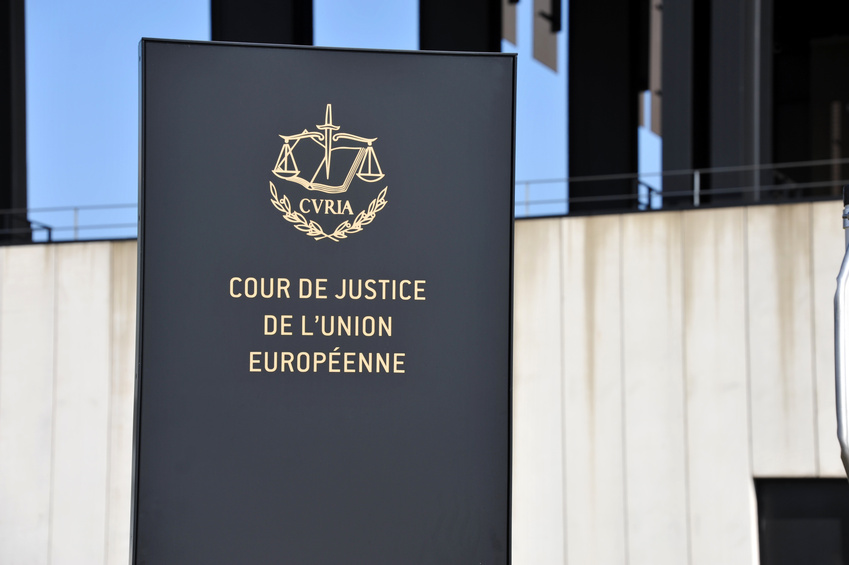
In a recent decision, the Court of Justice of the European Union (ECJ) determines how the term “establishment” used in the EU Data Protection Directive 95/46/EC must be interpreted and thereby on the applicability of national data protection law in cases with a cross-border context as well as on the power of national data protection authorities in this regard. This has practical implications.